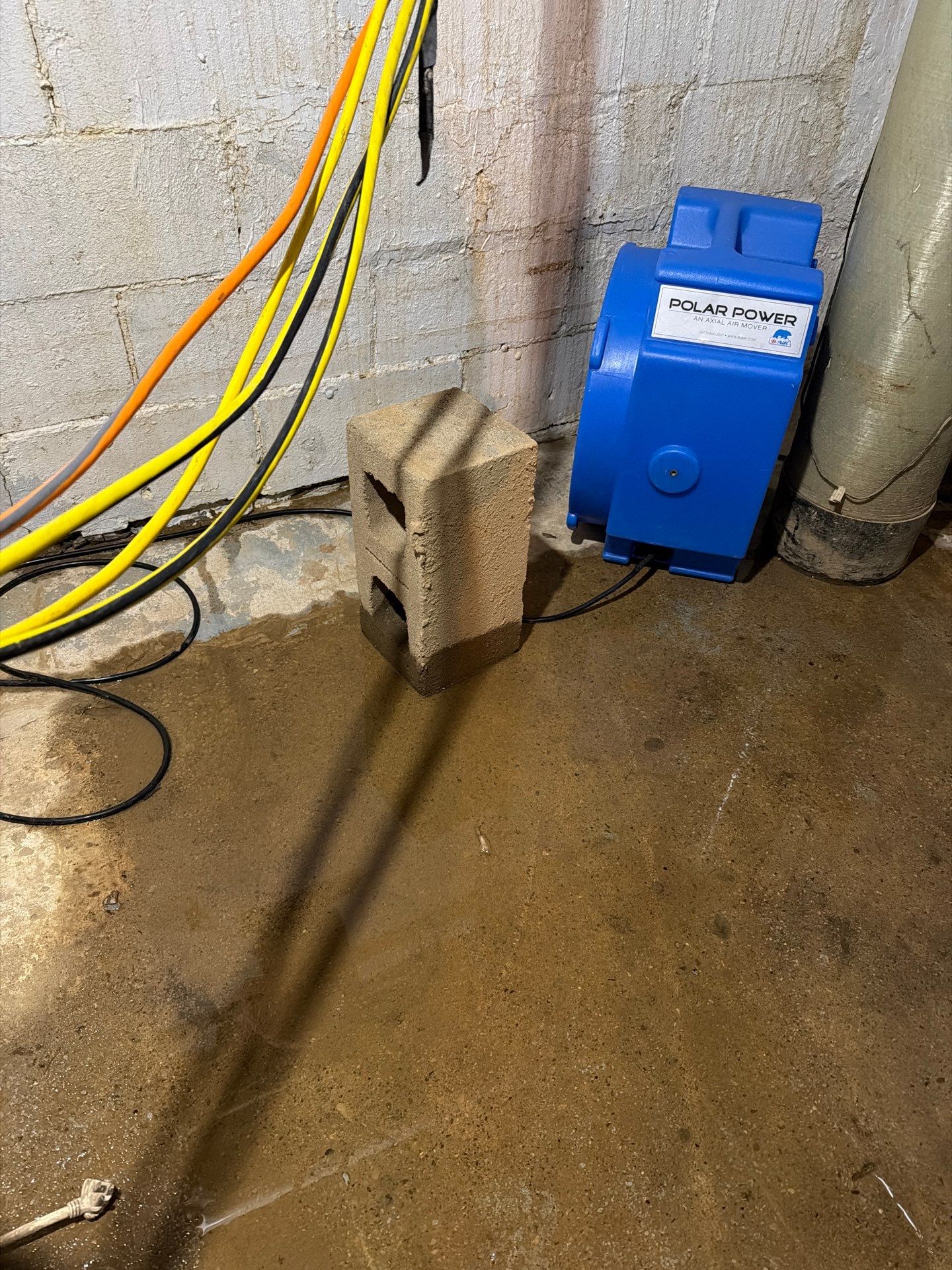
Step 1: Emergency Dispatch and Initial Assessment
- Call received, crew dispatched. Target arrival in Brendonwood is 60 to 90 minutes for emergency calls.
- Trip and assessment fee: $0 to $250. Brendonwood Water Restoration waives this when you proceed with mitigation.
- Moisture mapping: Thermal imaging plus pin and pinless meters. Technician documents readings every 4 feet along affected walls.
- Category determination per IICRC S500:
- Category 1 (clean water): supply line, sink overflow.
- Category 2 (gray water): dishwasher, washing machine, aquarium.
- Category 3 (black water): sewage, flood, standing water over 48 hours.
- Class determination (1 through 4): based on evaporation load and material porosity.
- Initial scope documentation: sketch of affected rooms, square footage measurements, and photo log of pre-existing conditions.
- Source verification: technician confirms the leak is stopped before extraction begins. Active source adds $150 to $450 in emergency plumbing coordination.
- Safety check: electrical panels, gas appliances, and slip hazards are flagged before equipment is staged.
Step 2: Water Extraction Pricing
- Standing water removal: $0.75 to $1.75 per square foot for Category 1.
- Category 2 extraction: $2.00 to $4.50 per square foot. Requires antimicrobial pre-treatment.
- Category 3 extraction: $4.50 to $7.50 per square foot. Full PPE, containment, and biohazard disposal required. See our sewage cleanup service for scope details.
- Truck-mounted extraction: handles up to 100 gallons before dump cycle.
- Submersible pump rates: 1,500 to 3,500 GPH for basement flooding events.
- Weighted extraction tool (carpet rescue): $0.50 to $1.00 per square foot when salvage is possible.
- Specialty hardwood mat system: $4.00 to $8.00 per square foot per day. Used to draw moisture from tongue-and-groove flooring without demolition.
- After-hours surcharge: 15% to 30% premium for crews dispatched between 10 PM and 6 AM.
Step 4: Equipment Setup and Daily Monitoring
- Air movers: $25 to $50 per unit per day. Standard placement is one unit per 50 to 60 linear feet of wall.
- LGR dehumidifier: $75 to $130 per unit per day. Pulls 9 to 18 gallons per 24 hours.
- Desiccant dehumidifier (large losses): $200 to $400 per day.
- Air scrubber with HEPA: $75 to $150 per day. Required for Category 3 and any mold presence.
- Containment barriers (6 mil poly): $1.50 to $3.00 per square foot.
- Daily monitoring visit: $75 to $150 per visit. Standard drying window is 3 to 5 days.
- Psychrometric readings logged: temperature, relative humidity, grains per pound, and material moisture content at each affected surface.
- Drying goal: material moisture content within 2 percentage points of an unaffected reference area on the same substrate.
Step 5: Antimicrobial and Sanitization Pricing
- Surface antimicrobial application: $0.30 to $0.50 per square foot.
- Fogging treatment: $250 to $600 per affected area.
- Content cleaning (per item): $5 to $50 depending on porosity.
- Pack-out and storage: $1.50 to $3.00 per cubic foot, plus monthly storage of $0.50 to $1.00 per cubic foot.
- Document and photo restoration: $4 to $12 per item for freeze-drying recovery.
- HVAC sanitization: $400 to $950 when contaminated water entered return ducts.
Step 8: Reconstruction Cost Ranges
- Drywall replacement: $2.50 to $4.50 per square foot installed and finished.
- Baseboard reinstall and paint: $3.00 to $6.00 per linear foot.
- Carpet and pad replacement: $3.50 to $7.00 per square foot.
- LVP installation: $5.00 to $9.00 per square foot.
- Hardwood refinish: $4.50 to $8.00 per square foot.
- Cabinet replacement (lower): $250 to $650 per linear foot.
- Interior paint (two coats, full room): $1.75 to $3.25 per square foot of wall area.
- Trim and door replacement: $175 to $425 per interior door, including casing and hardware.
Step 6: Total Cost by Loss Size
- Small loss (one room, Category 1): $1,200 to $3,500.
- Medium loss (multiple rooms or finished basement, Category 1 or 2): $3,500 to $8,500. Most basement events in Brendonwood fall here. Read our basement flooding cleanup guide for the full scope.
- Large loss (whole floor, multiple levels, Category 2): $8,500 to $22,000.
- Severe loss (Category 3, structural saturation): $22,000 to $55,000+.
- Commercial losses: typically run 1.5x to 2x residential rates due to specialized equipment and after-hours labor.
Step 7: Insurance Claim Pricing Mechanics
- Estimating platform: Xactimate is used by Brendonwood Water Restoration and 90% of carriers, ensuring line-item alignment.
- Your out-of-pocket exposure: deductible only (typically $500 to $2,500) when the loss is covered.
- Sudden and accidental losses: usually covered. Long-term seepage and groundwater: usually excluded without a flood policy.
- Documentation provided: moisture maps, daily psychrometric logs, photos, and equipment inventory submitted directly to your adjuster.
- Direct billing: Brendonwood Water Restoration bills the carrier so you pay only your deductible at completion.
- Supplement handling: hidden damage discovered during demolition is documented and submitted as a supplement, typically approved within 5 to 10 business days.
- Depreciation recovery: actual cash value is paid initially, with recoverable depreciation released after reconstruction is complete and invoiced.
Step 9: Factors That Push Pricing Higher
- Multi-story water migration: adds 25% to 40% to baseline drying cost due to ceiling cavity access and additional containment.
- Hardwood floors (real, not engineered): specialty drying mats and extended monitoring can add $1,500 to $4,500 per affected room.
- Asbestos or lead presence in older Brendonwood homes: testing runs $350 to $850, and abatement adds $8 to $25 per square foot.
- Crawl space involvement: tight access and vapor barrier replacement adds $1,200 to $3,800.
- Mold colonization (visible growth over 10 square feet): remediation protocol adds $1,500 to $6,000 depending on containment size.
- Tenant displacement: additional living expense coordination is included in Brendonwood Water Restoration project management at no extra cost.
For the full mitigation scope, exclusions, and timeline expectations in your Brendonwood neighborhood, review our water damage restoration service page. Every number above reflects current Central Indiana labor and material rates as of this year.
Step 3: Demolition and Controlled Removal
- Carpet pad removal: $0.40 to $0.65 per square foot. Pad is almost never salvageable.
- Carpet removal and disposal: $0.60 to $1.20 per square foot.
- Drywall flood cut (2 feet up): $2.50 to $4.00 per linear foot. Required when insulation is saturated.
- Baseboard removal: $1.25 to $2.50 per linear foot.
- Hardwood flooring removal: $3.00 to $6.00 per square foot when cupping exceeds 1/8 inch.
- Insulation removal: $1.00 to $2.25 per square foot for fiberglass batts.
- Ceiling drywall removal: $2.75 to $4.50 per square foot. Always required when water travels from an upper floor.
- Vinyl or tile flooring removal: $2.00 to $4.00 per square foot when thinset adhesive must be ground down.
- Debris haul-off: $50 to $150 per cubic yard. A typical basement loss generates 4 to 8 cubic yards.